
"C ô te d'Ivoire"
400 article(s) found

Map of Coffee Bean producing areas in the World
1. Costa Rica Costa Rica 2. Cuba Cuba 3. Dominican Republic Dominican Republic 4. Ei Salvador El Salvador 5. Guadeloupe Guadeloupe 6. Guatemala Guatemala 7. Haiti Haiti 8. Honduras Honduras 9. Jamaica Jamaica 10. Martinique Martinique 11. Mexico Mosi
Global coffee producing area map coffee bean producing area
1. Costa Rica Costa Rica 2. Cuba Cuba 3. Dominican Republic Dominican Republic 4. Ei Salvador El Salvador 5. Guadeloupe Guadeloupe 6. Guatemala Guatemala 7. Haiti Haiti 8. Honduras Honduras 9. Jamaica Jamaica 10. Martinique Martinique 11. Mexico Mosi
International Coffee Organization member Fine Coffee Bean Organization
Angola Austria Austria Benin Benin Belgium / Luxembourg Belgium/Luxemburg Bolivia Bolivia UK Britain Brazil Brazil Cyprus Cyprus Burundi Burundi Denmark Denmark Cameroon Cameroon Finland Finland Central African Republic Central African R.

Introduction of 53 Coffee producing areas in the World
1. Costa Rica Costa Rica 2. Cuba Cuba 3. Dominican Republic Dominican Republic 4. Ei Salvador El Salvador 5. Guadeloupe Guadeloupe 6. Guatemala Guatemala 7. Haiti Haiti 8. Honduras Honduras 9. Jamaica Jamaica 10. Martinique Martinique 11. Mexico Mosi
Members of the International Coffee Organization: importing and exporting members
Angola Austria Austria Benin Benin Belgium / Luxembourg Belgium/Luxemburg Bolivia Bolivia UK Britain Brazil Brazil Cyprus Cyprus Burundi Burundi Denmark Denmark Cameroon Cameroon Finland Finland Central African Republic Central African R.
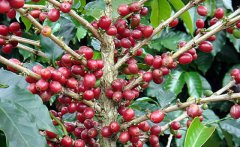
Ivorian boutique coffee
Ivorian boutique coffee has a strict grading system. Generally, raw beans are preserved in parchment coffee beans in the form of endocarp after processing, and the endocarp is removed before export. Go through a strict grading process to ensure the uniformity of quality. And the protection in the process of preservation and transportation is very important, such as temperature and humidity control, ventilation control, avoiding odor adsorption and so on.

53 kinds of coffee producing areas in the world Semi-automatic coffee machine suction parts
Uganda Yemen Zaire Zambia Zimbabwe China India India Indonesia La Reunion Philippines Taiwan China Taiwan Vietnam Australia Australia Hawaii New Caledonia New Eritrea

What are the coffee producing areas and countries?
. Kenya Madagascar Mozambique Rwanda St. Helena Sao Tome and Principe Sao Tome and Principe. South Africa. Sudan. Tanzania Uganda Yemen 39. Zaire Zambia Zambia
Introduction of Coffee beans Distribution Map of Coffee growing areas in the World
1. Costa Rica Costa Rica 2. Cuba Cuba 3. Dominican Republic Dominican Republic 4. Ei Salvador El Salvador 5. Guadeloupe Guadeloupe 6. Guatemala Guatemala 7. Haiti Haiti 8. Honduras Honduras 9. Jamaica Jamaica 10. Martinique Martinique 11. Mexico Mosi
What are the varieties of commercial coffee beans? what are Robusta coffee beans?
The robusta species (scientific name Coffea robusta Linden), which is resistant to leaf rust, is found in the African Congo and has stronger disease resistance than the Arabica species. The hot and humid zone that is not suitable for Arabica coffee is where Robusta grows coffee. Robusta has a unique aroma and bitter taste, accounting for only 2% or 3% of the mixed coffee, and the whole cup of coffee becomes Rob.

Classification of Coffee in Chinese National Standard
There are more than 60 kinds of coffee, but there are roughly two varieties of coffee grown commercially on a large scale, one is Arabica, accounting for about 70 percent of the world's coffee planting area, and the other is Robasta, accounting for about 30 percent of the world's coffee planting area.
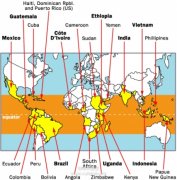
Coffee fundamentals Coffee with Coffee Zone
There are more than 60 coffee producing countries in the world, most of which are located in the tropics and subtropics between the Tropic of Cancer (latitude 2326). This coffee growing area is called coffee belt (Coffee Belt) or coffee area (Coffee Zone). The annual average temperature of the coffee belt is above 20 ℃, because the coffee tree is a tropical plant and cannot grow normally if the temperature is below 20 ℃. Coffee species

International coffee prices may rise for a long time.
The 50th African Coffee Organization Conference was held in Nairobi, Kenya, a few days ago. Participants expect international coffee prices to remain high over the next decade because of a growing middle class in emerging markets. Industry insiders present at the meeting said that international coffee prices plummeted in the 1990s and demand for coffee was supported by a fast-growing middle class in emerging markets.
Botanical knowledge of coffee
There are more than 60 kinds of coffee, but there are roughly two varieties of coffee grown commercially on a large scale, one is Arabica, accounting for about 70 percent of the world's coffee planting area, and the other is Robasta, accounting for about 30 percent of the world's coffee planting area.
The hometown of coffee
According to the study of the origin of coffee, it is agreed that the earliest place of origin of coffee should be Ethiopia in Africa (ancient Abyssinia), which has produced magical fruits that have affected the world to this day.

How much do you know about the botany of coffee?
There are more than 60 kinds of coffee, but there are roughly two varieties of coffee grown commercially on a large scale, one is Arabica, accounting for about 70 percent of the world's coffee planting area, and the other is Robasta, accounting for about 30 percent of the world's coffee planting area.
Introduction to Cameroon Coffee
According to the National Office of Cocoa and Coffee of Cameroon (ONCC), by the end of the coffee harvest year 2012 Coffee in 2012, there was a significant decline in coffee production in Robsta and stagnation in Arabica, with a total commercial coffee production of 16142 tons, a decrease of 21985 tons compared with the previous coffee harvest of 38127 tons.
LIFFE coffee futures fell slightly in the market with ample supply
On Friday, LIFFE- January Robusta coffee futures on the London International Financial Futures Exchange closed down $1, or 0.05%, at $2074 a tonne, on the back of abundant supply in Vietnam, the largest coffee grower. New York Arabica coffee futures rose on Friday, driven by technical buying, but cocoa futures fell, extending the longest weekly decline since the end of 2012 due to technical weakness and the largest species.
Coffee botany
There are more than 60 kinds of coffee, but there are roughly two varieties of coffee grown commercially on a large scale, one is Arabica, accounting for about 70 percent of the world's coffee planting area, and the other is Robasta, accounting for about 30 percent of the world's coffee planting area. According to our national standards, the classification of coffee is mainly divided into the following five varieties. 1. Small seed coffee, that is, Arabian species. Originated in Ethiopia
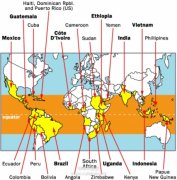
Coffee knowledge, boutique coffee, common sense coffee with Coffee Zone
There are more than 60 coffee producing countries in the world, most of which are located in the tropics and subtropics between the Tropic of Cancer (latitude 2326). This coffee growing area is called coffee belt (Coffee Belt) or coffee area (Coffee Zone). The annual average temperature of the coffee belt is above 20 ℃, because the coffee tree is a tropical plant and cannot grow normally if the temperature is below 20 ℃. Coffee species